
The holidays are loud.
They sparkle, they smell, they hum with overstimulation—and for neurodiverse kids, that can be a sensory tsunami.
Whether it’s flashing lights, new foods, hugging relatives, or just being out of routine, the season is filled with sensory demands that overwhelm even the most regulated child.
But you can absolutely create safe pockets of calm within the chaos.
Enter: Sensory Safe Zones.
These intentional spaces help your child regulate, retreat, and recover—whether you’re home for the break or visiting family.
Let’s break down what they are, why they matter, and how to set one up anywhere.
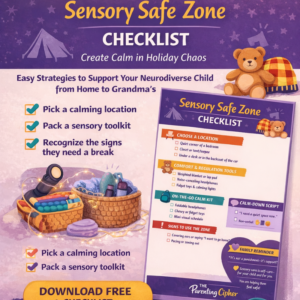
A sensory safe zone is a designated spot that:
Minimizes stimulation (light, noise, smell)
Feels physically and emotionally safe
Provides sensory tools for self-regulation
This is not punishment.
This is not isolation.
This is a recharge zone—a place where your child can breathe, reset, and feel in control of their environment.
“Your child’s reaction isn’t the problem—it’s the sign. That’s why we slow the season down and make space for calm.” — Genie Dawkins, The Parenting Cipher
Let’s be honest: winter break can feel like a non-stop series of new.
New smells. New people. New clothes. New routines. New expectations.
For children with autism, ADHD, SPD, or anxiety, this “newness” doesn’t feel exciting—it feels like danger. Their nervous system says:
“This isn’t predictable. I don’t feel safe.”
A sensory safe zone tells their body:
“Here’s your space. Here’s your calm.”
And that’s powerful.
You don’t need a Pinterest-worthy setup.
Start simple. Use what you already have.
A quiet corner of their room
A closet with a curtain
A small tent or pop-up playhouse
Under a desk or table
Even the backseat of the car with a weighted lap pad
Tip: Make sure siblings know this space is off-limits when in use.
Start with:
Weighted blanket or lap pad
Noise-canceling headphones
A fidget bin (pop-its, squishies, therapy putty)
A calm visual (lava lamp, glitter jar, soft lighting)
A familiar comfort item (stuffed animal, photo, soft fabric)
Optional add-ons:
Chewy necklaces or oral sensory tools
Scented lotion or essential oils (if they’re into that)
Visual schedule posted nearby
Bluetooth speaker with calm music
This isn’t about adding everything. It’s about including what calms your child.
What if you’re headed to Grandma’s?
No problem. You can pack a portable version in a sensory go-bag:
🎒 On-the-Go Calm Kit:
Foldable noise-reducing headphones
Chewables or gum
Mini visual schedule or social story
Sensory bottle or travel fidgets
Travel pillow or weighted shoulder wrap
Calming essential oil roller (like lavender or citrus)
A card with their “I need a break” script
💬 Script Example:
“I need a quiet space now. I’ll come back when I feel calm.”
If your child is non-verbal, use visuals or laminated cue cards.
Sometimes extended family doesn’t understand why your child needs their own space.
You don’t owe them a TED Talk—but you can use a gentle boundary:
“This is part of how we help [child’s name] feel safe. It’s not a punishment—it’s a support tool, like glasses or a wheelchair ramp.”
Or:
“We’re teaching them to recognize when they’re overwhelmed and take a break. It’s actually a big self-regulation win.”
You get to protect your child’s peace and their dignity.
Pay attention to your child’s signals.
Use it before they hit a meltdown:
They start covering their ears
They say “I hate this” or “I want to go home”
They’re more irritable or zoning out
They start fidgeting or pacing
Encourage a break before they break down.
Over time, your child will learn to notice those early signs too.
We talk a lot about “self-care” for parents.
But sensory self-care for kids? That’s powerful.
Creating a safe zone—at home or on-the-go—isn’t just about avoiding meltdowns.
It’s about empowering your child with tools and space to feel safe in a world that often feels too loud.
And honestly?
That’s one of the greatest gifts you can give this season.
📥 Download our Sensory Safe Zone Checklist
🎧 Listen to: Beyond Report Cards: Slow the Season Down — The Parenting Cipher Podcast
List of the best sensory tools
A heart-centered episode about rethinking expectations, honoring your child’s needs, and finding peace in the midst of holiday overstimulation.s
💬 Comment below: What’s in your child’s calm-down kit?